

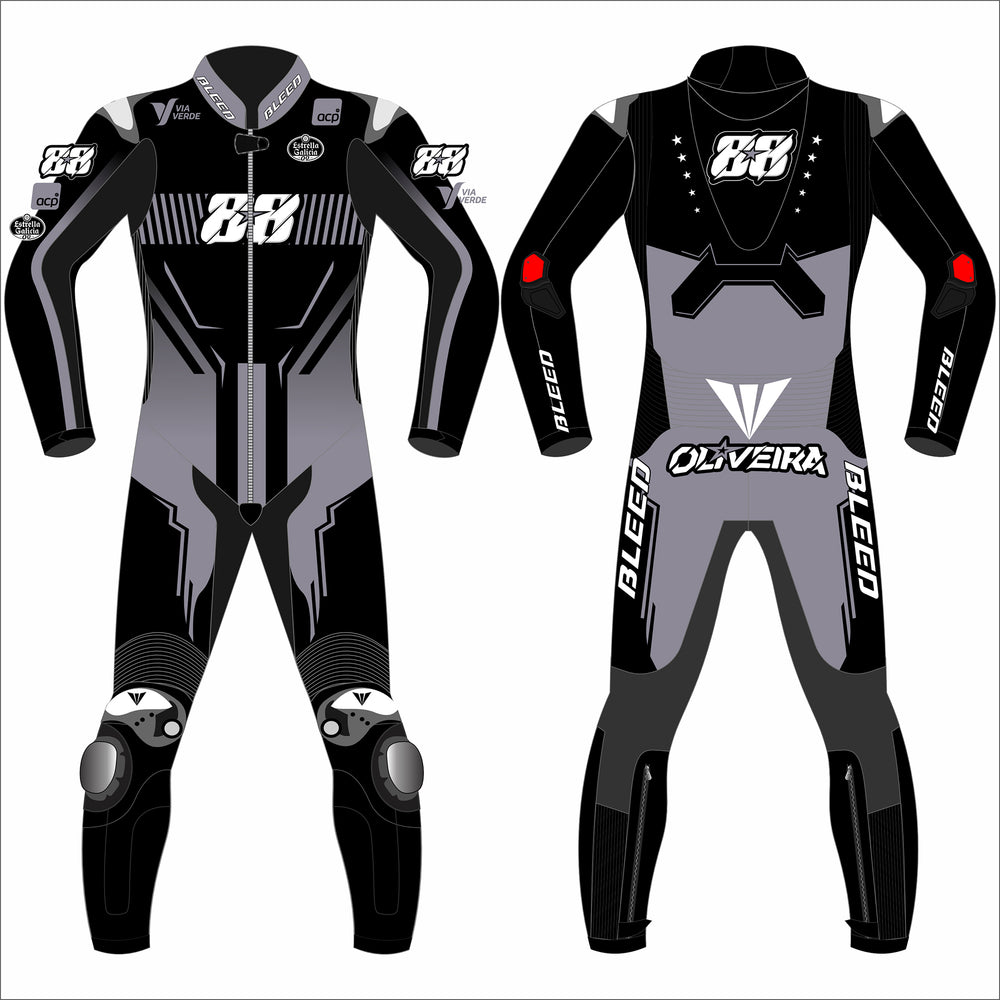
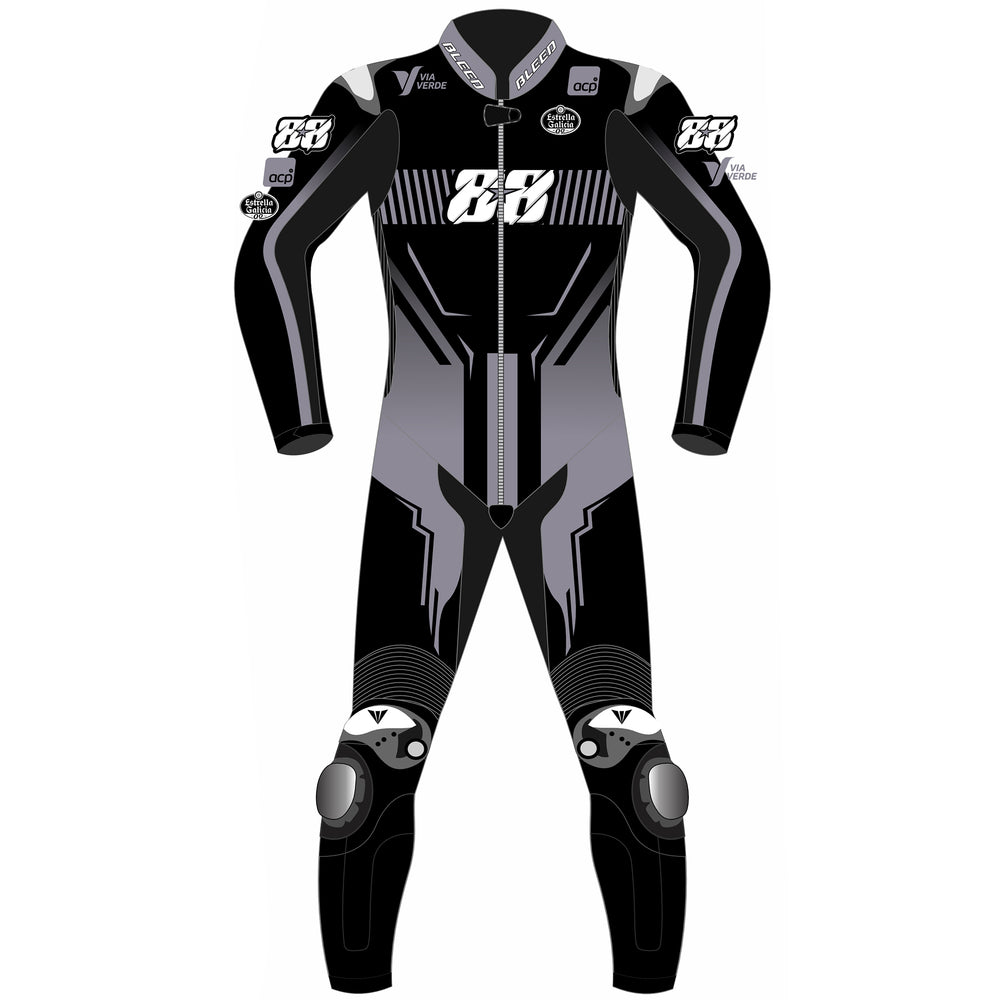
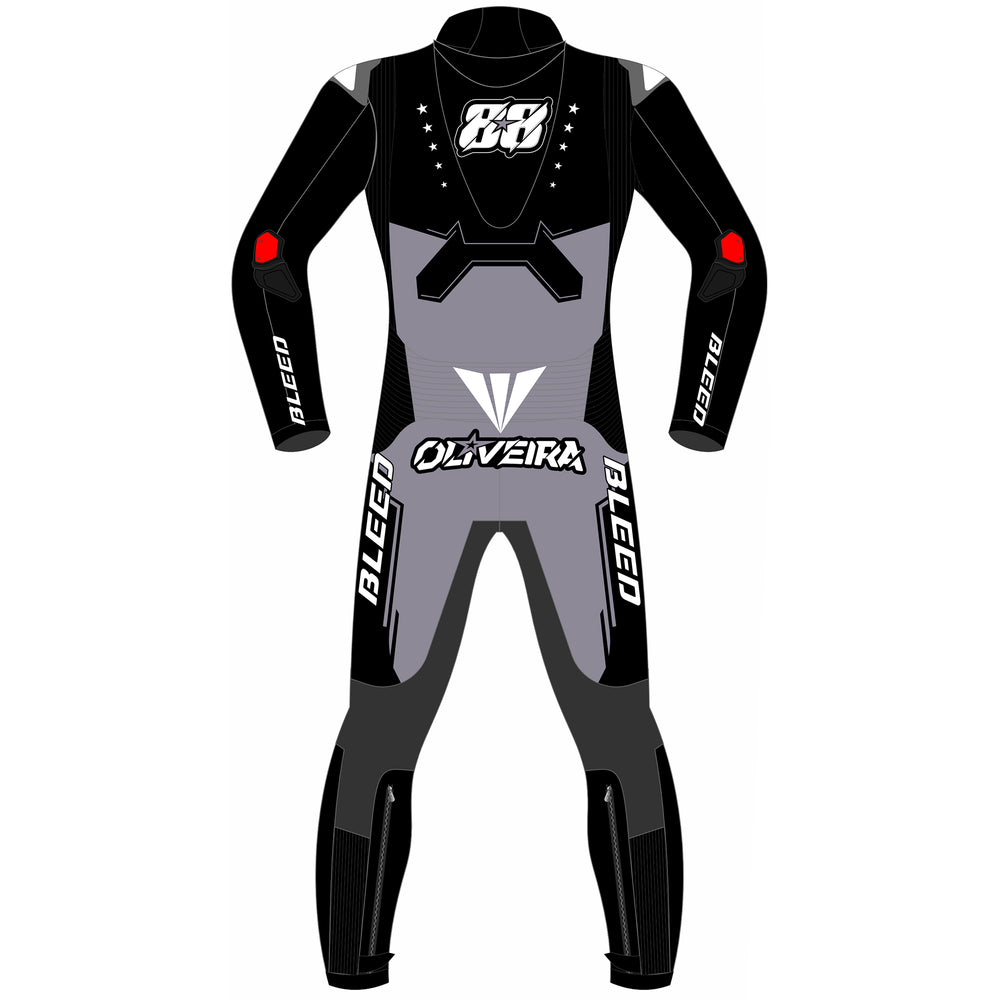
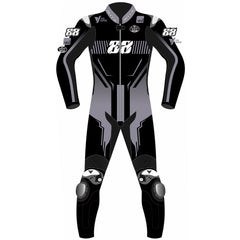
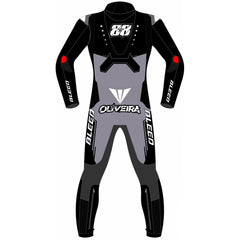
Miguel Oliveira Pramac Yamaha Winter Test 2025 MotoGP Leather Racing Suit
- $906.00
- $906.00
- Unit price
- per
The listed price is the base price for this product. Optional customization or upgrades are available and will increase the final total only when selected. Any additional cost will be clearly shown on this page before checkout. No hidden charges are applied. Custom made-to-order items are safely delivered within 19–28 business days to account for premium leather tailoring, dedicated safety inspections, and international transit.
The Miguel Oliveira Pramac Yamaha Winter Test 2025 MotoGP Leather Racing Suit is finished in the Yamaha colours Miguel Oliveira raced during the 2025 MotoGP season, in the one-off scheme run at pre-season testing rather than the race livery. Test liveries are produced in small numbers and rarely reappear, which is what makes them collectible.
This suit reproduces that design in full-grain cowhide, cut to your own measurements, with CE Level 2 armour at the shoulders, elbows, knees and back. It suits track days, circuit riding, fast road use and collectors who want the livery made properly rather than printed onto a thin shell.
Outer Shell
- Full-grain cowhide leather, 1.3–1.4 mm, for high abrasion resistance — kangaroo 0.8–0.9 mm available as an upgrade
- Yamaha team colours reproduced in leather patchwork, cut and stitched from coloured hide so the design cannot crack, peel or fade like print
- Pre-curved sleeves and legs with race-fit ergonomic panelling for a natural riding position
- Triple safety stitching throughout with high-strength bonded nylon thread
- Original YKK zippers at the front, sleeve cuffs and ankles
- Kevlar stretch panels at the crotch, behind the calves and under the sleeves
- Accordion leather stretch across the lower back and above the knees for a forward racing crouch
- Reinforced leather at the shoulders, elbows, forearms, hips, knees and lower legs
- External CE certified protectors over the shoulders, elbows and knees
- Removable external knee sliders with hook-and-loop attachment
Inner Shell
- Removable CE Level 2 shoulder, elbow and knee armour certified to EN 1621-1:2012
- Dedicated back protector compartment with a removable CE Level 2 protector certified to EN 1621-2:2014
- Breathable 100% polyester mesh lining for airflow and moisture management
- Two internal pockets for phone, wallet and small essentials
- Fully safety stitched interior
- Removable internal lining available as an optional upgrade
Armour Specification
| Body area | Standard | Level |
|---|---|---|
| Back | EN 1621-2:2014 | Level 2 |
| Shoulders | EN 1621-1:2012 | Level 2 |
| Elbows | EN 1621-1:2012 | Level 2 |
| Knees | EN 1621-1:2012 | Level 2 |
Armour is KeepTech, independently tested and certified by Ricotest, European Notified Body No. 0498, Pastrengo, Italy, under EU Regulation 2016/425 as Category II PPE, CE and UKCA marked. Level 2 transmits about 20 kN in the standard impact test against roughly 35 kN for Level 1.
Riders and Bikes
Most often ordered by riders on the Yamaha YZF-R1, R7, R6, MT-09 and MT-10. The cut suits a sportbike riding position and works equally on Honda CBR, Kawasaki Ninja ZX-10R, Yamaha R1 and R7, Suzuki GSX-R and Ducati Panigale.
Additional Customization
- Leather options: full-grain cowhide, kangaroo or Monaco hide
- Stretch material: standard Kevlar or Schoeller-Keprotec® upgrade
- Fitting: race, regular or relaxed
- Perforation: non-perforated, fully perforated, partially perforated or selective panel ventilation
- Construction: one piece or two piece suit
- Inside lining: fixed or removable polyester mesh
- Colours: Yamaha 2025 scheme or fully custom combinations
- Logos: leather patchwork or printed
- Personalisation: rider name, racing number, team identity or custom text
- Speed hump: optional small, medium or large
- Matching equipment: matching gloves, boots and leather accessories
- Custom fitting: standard sizing and tailor-made measurements for men and women
Size and Fit
Cut to a close, performance-focused racing fit. Review the full size chart before selecting a standard size, or send your body measurements for the tailor-made option at no extra cost.
A new suit should feel firm standing upright and correct once you are sitting on the bike. Full-grain leather relaxes and moulds to you over the first few rides. Fit is a safety feature, not a preference: a loose suit lets armour migrate off the joint it protects during a crash. Riders wanting more room through the chest, waist or legs should choose a regular or relaxed fit rather than a race fit.
Frequently Asked Questions
What armour does this suit use?
CE Level 2 at every position — back to EN 1621-2:2014, and shoulders, elbows and knees to EN 1621-1:2012 — tested and certified by Ricotest, European Notified Body No. 0498, Pastrengo, Italy.
What is a winter test livery?
A one-off scheme teams run during pre-season testing before the race livery is revealed. They are produced in very small numbers and rarely repeat, which is why test suits are collected rather than simply worn.
Can you match my Yamaha’s exact colour?
Yes. Send a photograph or the paint reference and the leather is dyed to match as closely as hide allows. Yamaha shades in particular are hard to reproduce in generic coloured leather, which is why custom matching is offered.
Can I use this suit on the road as well as the track?
Yes. The specification is the same either way. A one piece is less convenient off the bike, so riders splitting their time between road and track often prefer the two piece version of the same livery.
Should I choose cowhide or kangaroo leather?
Kangaroo at 0.8–0.9 mm gives comparable abrasion resistance to cowhide at 1.3–1.4 mm for noticeably less weight, which is why most professional racers use it. Full-grain cowhide is harder wearing over many seasons and costs less.
What is the difference between Level 1 and Level 2 armour?
The rating measures how much force passes through the protector in a controlled impact test. Level 2 transmits about 20 kN, Level 1 about 35 kN. Less transmitted force means less energy reaching bone and joint. Every protector in this suit is Level 2.
Should I choose perforated leather?
Perforated leather ventilates far better in heat but slightly reduces abrasion resistance in the perforated panels. Partial perforation — vented chest and leg panels with solid leather over the impact zones — is the usual compromise for hot-weather riding.
Care Instructions
- Clean the exterior with a soft, slightly damp cloth
- Use a suitable leather cleaner and conditioner when required
- Do not machine wash, tumble dry or bleach
- Remove internal armour and lining before deep cleaning
- Dry naturally, away from direct sunlight and artificial heat
- Store on a wide hanger in a cool, dry place
Size chart

Customer reviews
Related Products
- $906.00
- $906.00
- Unit price
- per
- $906.00
- $906.00
- Unit price
- per
- $906.00
- $906.00
- Unit price
- per
- $906.00
- $906.00
- Unit price
- per
- $906.00
- $906.00
- Unit price
- per
- $906.00
- $906.00
- Unit price
- per
- $906.00
- $906.00
- Unit price
- per
- $906.00
- $906.00
- Unit price
- per
- $906.00
- $906.00
- Unit price
- per
- $906.00
- $906.00
- Unit price
- per
- Choosing a selection results in a full page refresh.